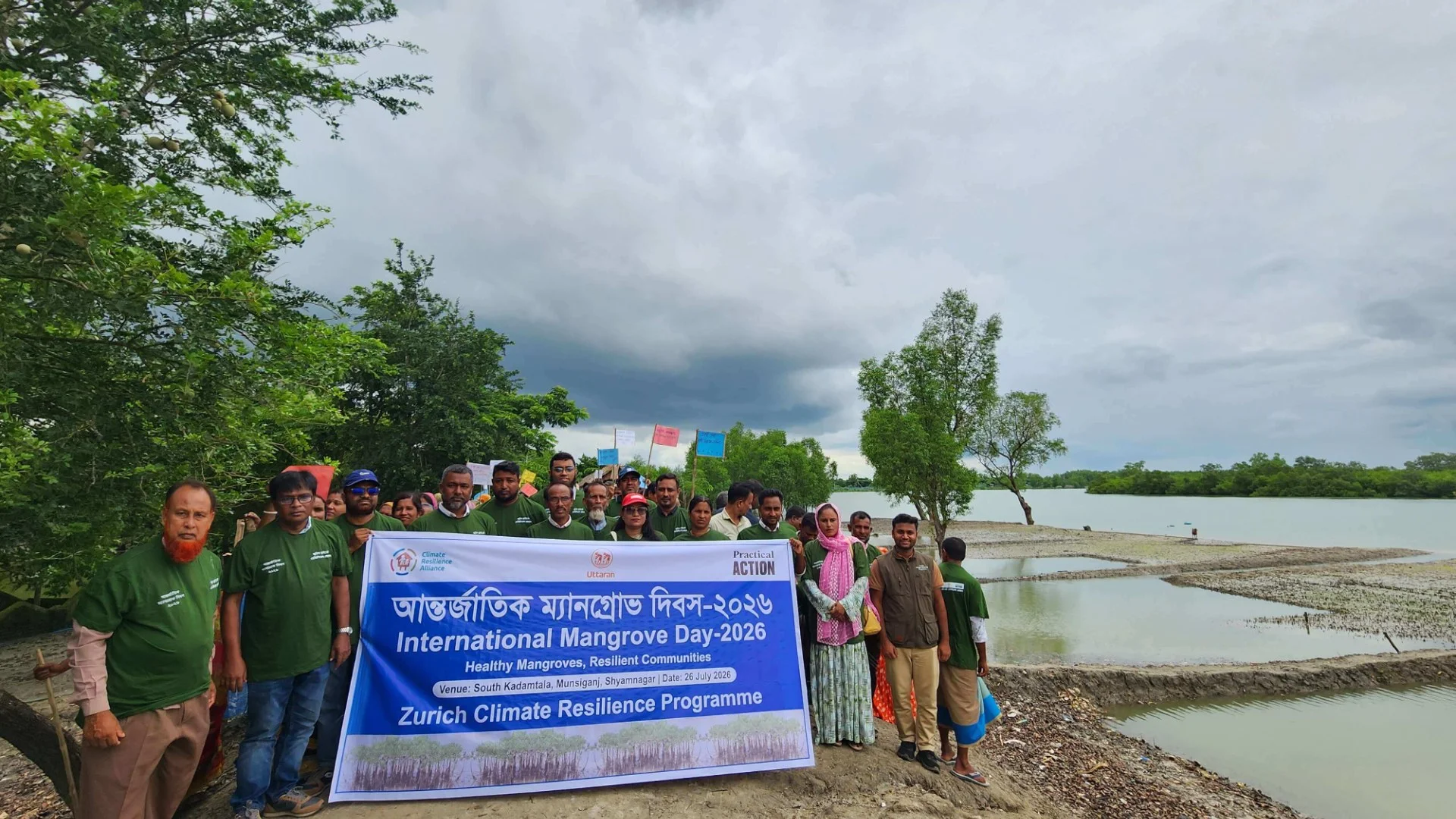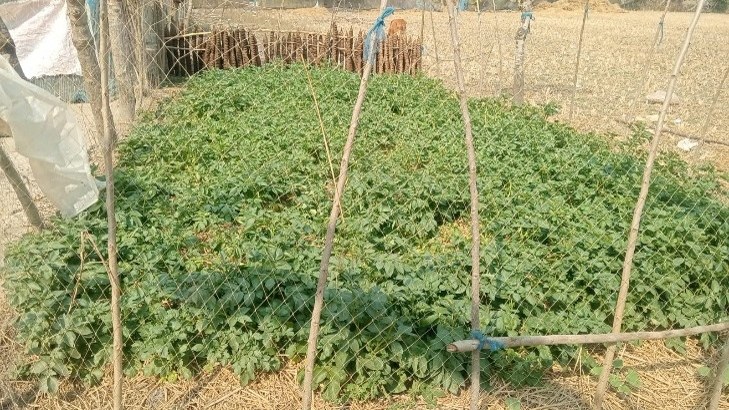
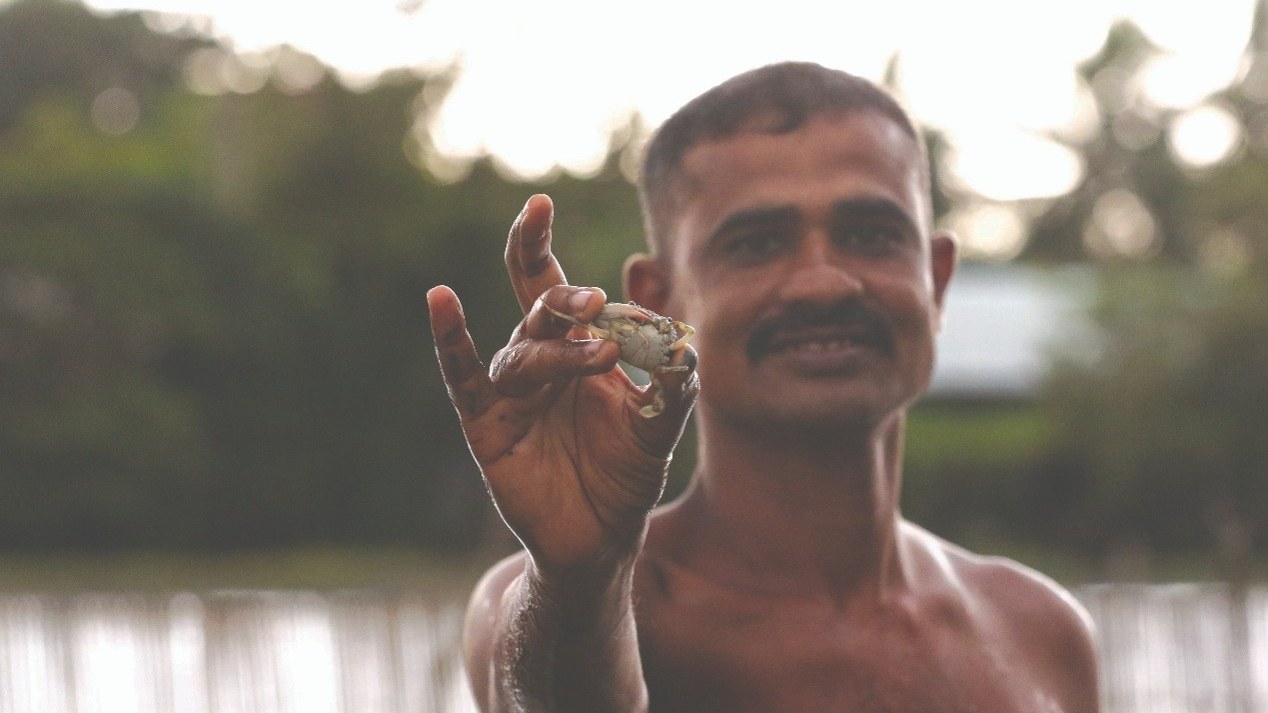
Turning to the Mangroves for Survival
The Sundarbans, the largest mangrove forest, provides fish, honey, timber, and especially wild mud crabs. It also acts as a natural barrier against storm surges, slowing cyclonic floodwaters before they reach vulnerable settlements. Sundarbans have sustained coastal households both ecologically and economically for generations.
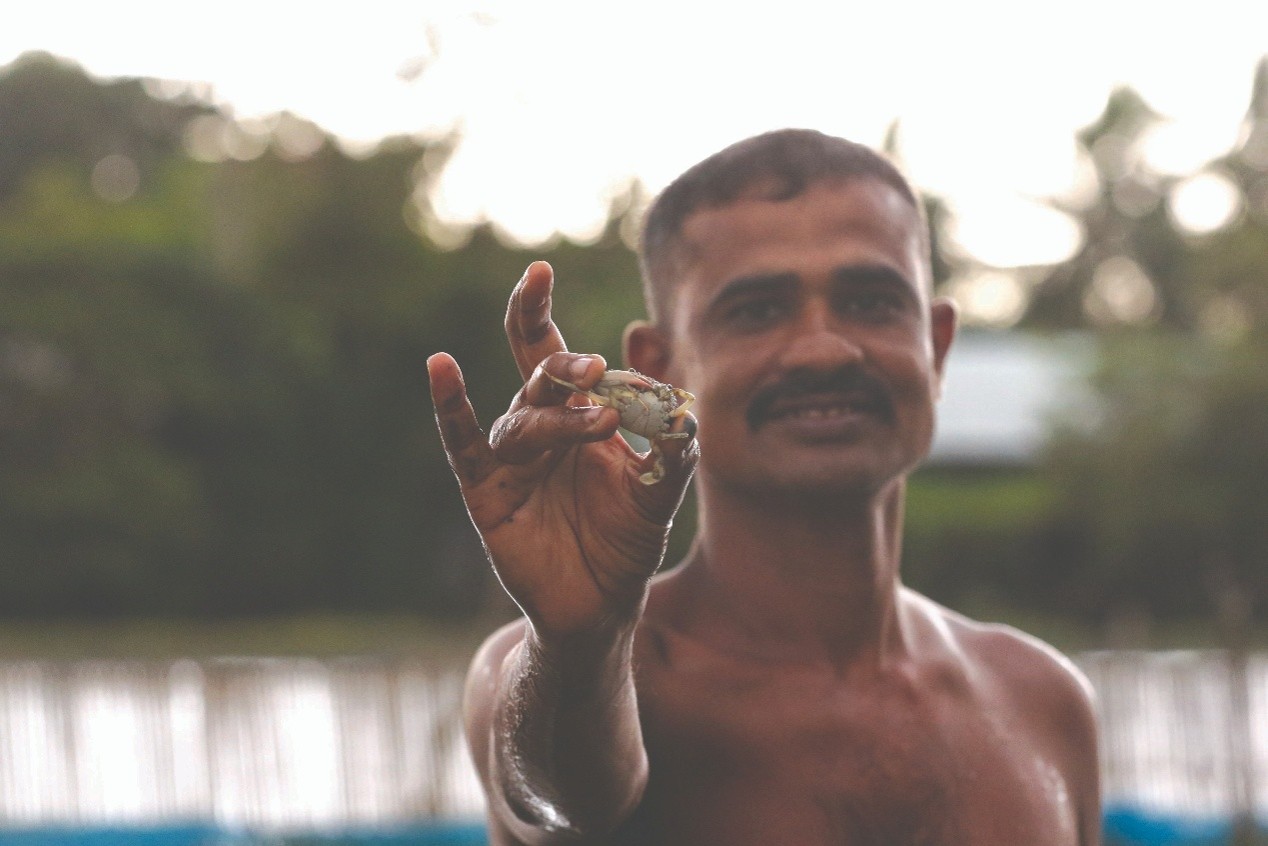
Yet increasing reliance on wild crab harvesting created new risks. As agriculture declined, more families collected mud crabs from mangrove creeks to earn income. Market demand expanded rapidly, and juvenile and breeding crabs were often harvested before they could reproduce. Crab populations began declining sharply. Overharvesting of this keystone species threatened not only incomes but the ecological balance of the mangrove system.
Mud crabs play an important role in keeping mangrove ecosystems healthy. When they dig into the mud, they loosen the soil, allow air to enter, and help nutrients move through the ground. This creates better conditions for young mangrove trees to grow. Crabs also help keep the mud stable and support other species like fish, birds, and small marine animals. When crab numbers declined, the mangrove ecosystem began to suffer. Without action, both biodiversity and local livelihoods were at risk of long-term damage.
Nurturing Biodiversity, Nurturing Resilience
Through Practical Action’s Community-Based Adaptation in Vulnerable Coastal Areas project, in coastal Bangladesh, communities piloted a transformative alternative: community-managed crab nurseries. Small hatcheries and ponds were designed to rear crabs from larvae to market size.
Instead of collecting juvenile crabs from the wild, communities learned to breed and raise mud crabs in controlled environments. This approach enabled year-round production without depleting natural stocks. Mud crabs tolerate saline conditions that destroy most crops, making them particularly suited to climate-affected coastal landscapes. Through improved aquaculture techniques, villagers, including many women, began cultivating crabs for local and export markets.
The results were significant. Small batches of hatchlings could grow into substantial harvests within weeks, generating reliable income. Breeding success improved, and wild populations began stabilizing. Crab farming became both an economic adaptation strategy and a biodiversity conservation measure.
Each hatchling raised in a nursery meant one less taken from the wild mangrove creeks.
Governing the Commons: Safeguarding Breeding Cycles and Mangroves
The mud crab story is also a lesson in governing common pool resources. The Sundarbans’ crabs are a shared resource: difficult to exclude harvesters from, yet vulnerable to overuse. Without collective rules, short-term incentives can lead to long-term depletion. Communities worked with the Bangladesh Forest Department to respect the annual two-month seasonal ban during peak breeding season (January–February). Though incomes temporarily dipped, awareness and shared enforcement strengthened compliance. Diversified livelihoods from nurseries reduced pressure during the no-catch period, ensure stock replenishment and long-term ecological stability.
Mangrove restoration became another cornerstone of adaptation. Community nurseries cultivated mangrove and salt-tolerant seedlings, planting them along canals and embankments. Healthy mangroves provide essential nursery habitat for crabs and fish, stabilize soils, and buffer against storm surges. When mangroves recover, crab habitats improve, helping both the ecosystem and crab populations grow stronger.
Biodiversity and a Shared Future
The experience in coastal southwest Bangladesh shows that biodiversity conservation and climate adaptation are inseparable. Protecting mud crabs strengthens mangrove ecosystems. Healthy mangroves reduce disaster risks. Reduced ecological stress improves fisheries, food security, and income stability.
Each protected breeding season strengthens future populations. As mud crabs recover, soil aeration improves and mangrove regeneration becomes more successful. What began as a response to economic hardship has evolved into a locally led model of ecological stewardship.
References:
- Green Climate Fund. (2025, June 7). From salty waters to stronger futures: Crab farming boosts livelihood resilience along Bangladesh’s coast.
- Hossain, H. (2026, January 1). Two-month crab harvesting ban begins in Sundarbans Satkhira Range.
- Jena, M. (2018, March 18). As floods rise in Bangladesh, crab farming helps families tread water.
https://news.trust.org/item/20180318070705-vl983/
- Pati, S. G., Paital, B., Panda, F., Jena, S., & Sahoo, D. K. (2023). Impacts of Habitat Quality on the Physiology, Ecology, and Economical Value of Mud Crab Scylla sp.: A Comprehensive Review. In Water (Switzerland) (Vol. 15, Number 11). MDPI.
https://doi.org/10.3390/w15112029
- Practical Action. (2021, December 9). Samakant: Master of the rising tide.
https://practicalaction.org/news-stories/samakant-master-of-the-rising-tide/
- Practical Action & United Nations Development Programme (UNDP). (2011). Community-based adaptation: Strengthening community resilience in the southwestern coastal area of Bangladesh.
- Practical Action Bangladesh. (n.d.-a). Annual report 2011: Practical Action Bangladesh.
- Practical Action Bangladesh. (n.d.-b). Annual report 2013: Practical Action Bangladesh